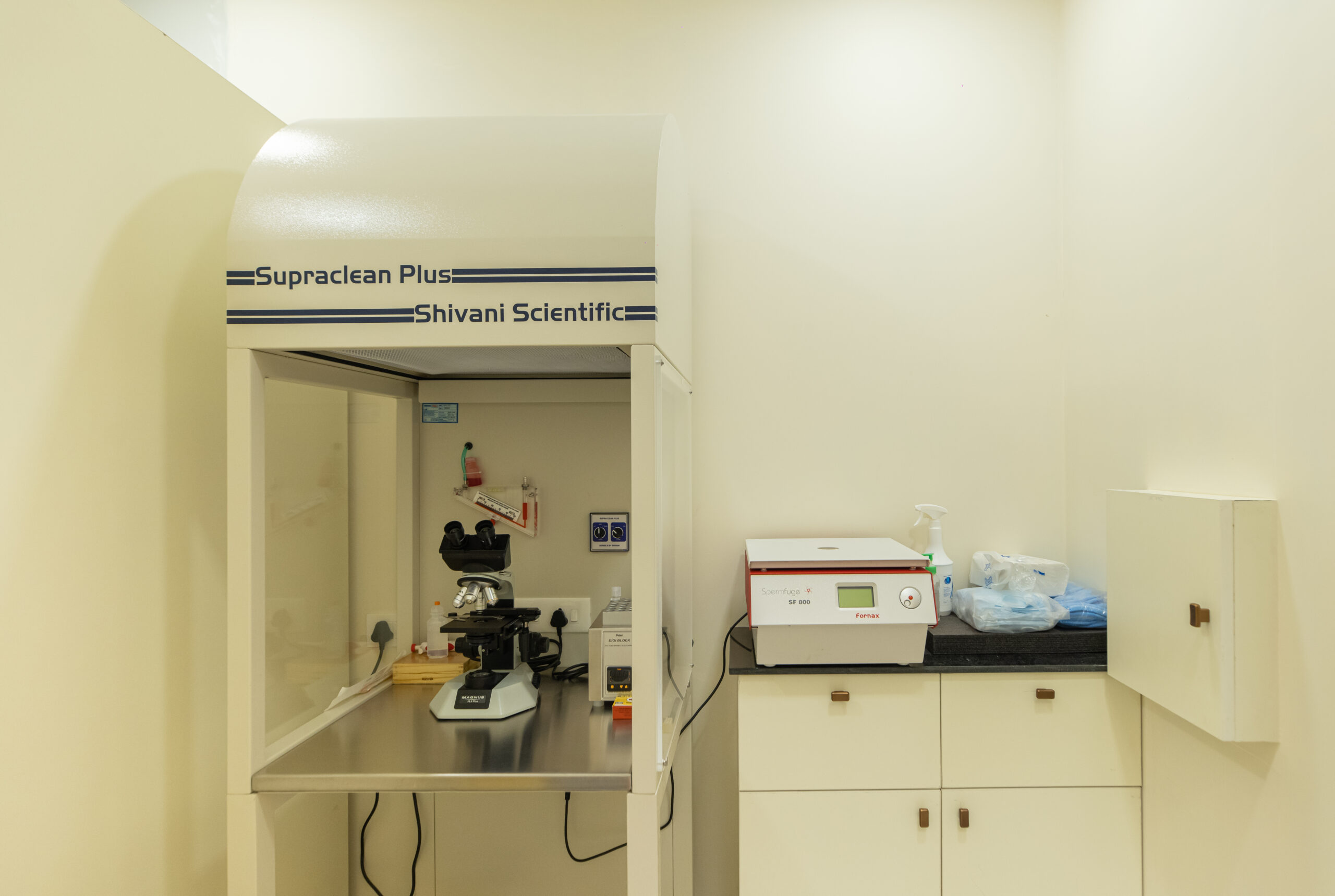
Male Fertility Tests
Semen Analysis & Sperm Health
Male fertility is not just about sperm count. Semen analysis looks at how many sperm are present, how well they move, how they’re shaped, and how the semen environment supports them. This single test often provides the fastest direction—whether your next step is lifestyle support, repeat testing, or moving toward timed planning/IUI/IVF.

Why this matters
Diagnostics
Even when everything else seems “normal,” sperm health can still affect the time it takes to conceive. This testing helps you understand:
Why Semen Analysis & Sperm Health Testing Matter
- Whether sperm count, motility (movement), and morphology (shape) are supportive of conception
- If semen quality suggests a treatable or improvable factor
- What next step makes sense—timed planning, IUI, IVF/ICSI, or targeted improvement
Who are these Test Recommended for
Recommended if you:
- Have been trying to conceive for 6–12 months (or 6 months if your partner is 35+)
- Want to check fertility early and avoid months of guesswork
- Have a history of smoking, alcohol, high stress, obesity, or poor sleep
- Have had fever/viral illness in the last 2–3 months (can affect sperm temporarily)
- Have varicocele, testicular pain, injury, swelling, or previous surgery
- Have a past history of STIs, urinary infections, or pelvic infections
- Have had recurrent miscarriages or repeated failed cycles and want deeper clarity
Creating a plan based on your goals—now or later
Semen Analysis and Sperm Health
What a Semen Analysis Checks
Core sperm parameters
Semen volume
Sperm concentration (count per ml)
Total sperm count
Motility (how well sperm move)
Morphology (shape/structure)
Vitality (how many are alive) (if motility is low)
Semen quality markers
Liquefaction time
pH
Viscosity
White blood cells / pus cells (infection/inflammation indicator)
Agglutination (clumping)
How to Prepare for a Semen Analysis
Maintain 2–5 days of abstinence before sample collection
Avoid fever, sauna/hot baths, heat exposure, and heavy alcohol close to the test window
Share any medications/supplements you’re taking
Follow the clinic’s collection instructions (collection method + timing matters)
When “Advanced Sperm Testing” is Considered
If semen analysis is persistently abnormal—or if you have unexplained infertility / repeated failures—your doctor may recommend additional testing such as:
Sperm DNA Fragmentation (DNA quality and integrity)
Semen culture (infection screening when indicated)
Hormone evaluation (FSH, LH, Testosterone, Prolactin, TSH) when clinically relevant
Scrotal ultrasound / varicocele evaluation (when symptoms or exam suggests)
Take the step that brings clarity to your journey.
Our 4-Step Mitra Pathway
Instead of pushing you into the most complex treatment first, we move through a clear, transparent pathway.
Listen & Understand
We begin with a detailed conversation about your health, cycles, lifestyle, and previous reports. No rushed 5-minute consults.
Test & Map
We recommend only the tests that matter for your case—so we can identify the real blockers early (for both partners), without unnecessary panels or confusion.
Decode & Prevent
We walk you through every result in simple language, then build a preventive plan to improve outcomes—cycle support, nutrition, lifestyle, and targeted medical care before stepping into advanced treatment.
Step Up—Only If Needed
If your reports show you need intervention, we move step-by-step—timed cycles, IUI, IVF/ICSI—based on what’s clinically right for you, with clear timelines, transparent options, and ongoing support.
Listen & Understand
We begin with a detailed conversation about your health, cycles, lifestyle, and previous reports. No rushed 5-minute consults.
Test & Map
We recommend only the tests that matter for your case—so we can identify the real blockers early (for both partners), without unnecessary panels or confusion.
Decode & Prevent
We walk you through every result in simple language, then build a preventive plan to improve outcomes—cycle support, nutrition, lifestyle, and targeted medical care before stepping into advanced treatment.
Step Up—Only If Needed
If your reports show you need intervention, we move step-by-step—timed cycles, IUI, IVF/ICSI—based on what’s clinically right for you, with clear timelines, transparent options, and ongoing support.
Trusted Expertise
Led by careful science.Grounded in real empathy.
Mitra Fertility & Beyond is led by, Dr. Vidyalatha, a fertility specialist with deep
experience in both preventive fertility care and advanced reproductive treatments.
- Evidence-based fertility protocols
- Transparent communication and honest counselling
- A calm, private environment that respects how sensitive this journey can be
Male Fertility Tests
What Tests you should Look Out For
Female fertility tests, explained clearly—so you know what to do, when to do it, and what your results mean.
Hormones, Lifestyle & Root Causes
When semen parameters are abnormal (or symptoms suggest it), hormone testing and targeted evaluation can identify the “why”—such as hormonal imbalance, thyroid/prolactin issues, metabolic factors, or lifestyle triggers. The focus stays practical: what can be improved, and how long it may take to see change.
Advanced Male Fertility Screening
For cases needing deeper clarity—recurrent IVF failure, unexplained infertility, repeated losses, or persistent abnormal semen results. This may include advanced sperm function testing, infection screening, and imaging to detect correctable causes (like varicocele) and guide the right next step.
Questions You Might Be Wondering About.
Is semen analysis the main test for male fertility?
It’s a set of ultrasound-based tests that assess the uterus, endometrial lining (uterine lining), ovaries, and sometimes the fallopian tubes—helping identify structural or timing-related factors that can affect conception and implantation.
Does a low count mean infertility?
Not necessarily. Many causes are treatable or improvable. The right next step depends on which parameter is affected and how severely.
Why might the test need to be repeated?
Sperm parameters can change due to stress, illness, heat exposure, or timing. A repeat test helps confirm whether a pattern is consistent.
Can lifestyle really affect sperm quality?
Yes—sleep, stress, smoking, alcohol, heat exposure, weight, and nutrition can influence sperm health. Improvements usually take 2–3 months to reflect in new sperm cycles.
What if semen analysis is normal but pregnancy isn’t happening?
A normal result is reassuring, but fertility is a couple-based evaluation. Next steps may focus on ovulation, tubes, uterine factors, and timing.
When is sperm DNA fragmentation testing needed?
It’s considered in select cases like unexplained infertility, recurrent pregnancy loss, or repeated IVF/implantation failure patterns—based on your doctor’s advice.