Fertility Tests

Let’s Understand Your Fertility Health Together

Understanding Your Fertility Before Your Start

Understanding fertility early can remove a lot of uncertainty. This check helps you clearly know where you stand today, instead of guessing or worrying without answers.
It supports calm planning, avoids unnecessary treatments, and helps you take steps that truly suit your body, age, and future goals.


Why It Helps

Understanding Your Fertility Before Your Start

Understanding fertility early can remove a lot of uncertainty. This check helps you clearly know where you stand today, instead of guessing or worrying without answers.
It supports calm planning, avoids unnecessary treatments, and helps you take steps that truly suit your body, age, and future goals.

Why It Helps

Female Fertility Tests

What Tests you should Look Out For

Female fertility tests, explained clearly—so you know what to do, when to do it, and what your results mean.

Hormones & Ovulation

Understand egg reserve, hormone balance, and whether ovulation is happening as it should. Tests are planned around the right cycle days for accurate results, followed by a clear explanation of what your markers indicate and what steps to take next.

Scan & Uterus Health

Ultrasound-based assessment of the uterus and ovaries to check follicle status, lining health, and common concerns like cysts, PCOS patterns, fibroids, or polyps. You’ll get a simple summary of findings and guidance based on what’s seen.

Tubes & Advanced Screening

For cases that need deeper clarity—checking if the fallopian tubes are open and exploring underlying factors when symptoms or past reports suggest more evaluation. Only relevant tests are advised, with a focused plan to help you move forward confidently.

Our Thoughtful Steps

Our 4-Step Mitra Pathway

Instead of pushing you into the most complex treatment first, we move through a clear, transparent pathway.

Take the first step toward clarity and confidence.

Listen & Understand

We begin with a detailed conversation about your health, cycles, lifestyle, and previous reports. No rushed 5-minute consults.

Test & Map

We recommend only the tests that matter for your case—so we can identify the real blockers early (for both partners), without unnecessary panels or confusion.

Decode & Prevent

We walk you through every result in simple language, then build a preventive plan to improve outcomes—cycle support, nutrition, lifestyle, and targeted medical care before stepping into advanced treatment.

Step Up—Only If Needed

If your reports show you need intervention, we move step-by-step—timed cycles, IUI, IVF/ICSI—based on what’s clinically right for you, with clear timelines, transparent options, and ongoing support.

Trusted Expertise

Led by careful science. Grounded in real empathy.

Mitra Fertility & Beyond is led by, Dr. Vidyalatha, a fertility specialist with deep
experience in both preventive fertility care and advanced reproductive treatments.

Gallery

Care Begins with the Right Environment

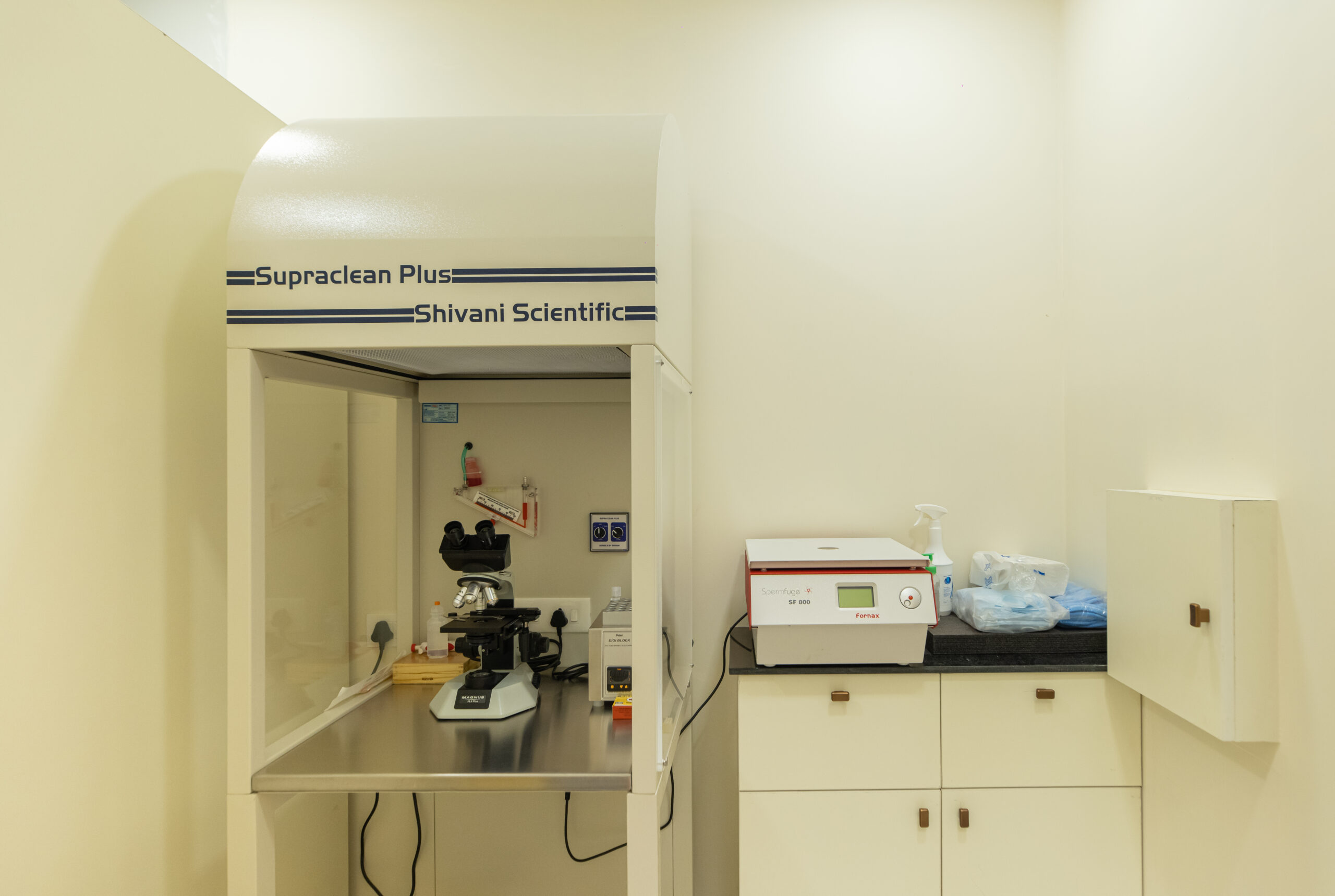
Our interiors are designed to support comfort, clarity, and trust from the moment you walk in.
Find Clarity

Questions you might be afraid to ask (but should).

Honest answers to the things you’ve been quietly wondering.
What are male fertility tests?

Male fertility tests are simple evaluations that check sperm health and the factors that can affect it—such as sperm count, movement, shape, and sometimes hormones or infections. The goal is to identify what’s impacting fertility and what can be improved.

If you’ve been trying to conceive for 6–12 months without success, if the female partner is over 35, if there’s a history of smoking/alcohol use, fever/illness, testicular injury, varicocele, or past infections, it’s a good time to test. Many couples also test early to save time.

The primary test is a semen analysis. It evaluates sperm count, motility (movement), morphology (shape), volume, and other parameters that help understand fertility potential.

Usually, you’ll be asked to maintain 2–5 days of abstinence before the test. Avoid alcohol, smoking, fever/heat exposure (hot baths/saunas), and intense late-night stress in the days leading up to the sample if possible.

Not always. Sperm parameters can vary. If results are borderline or abnormal, your doctor may recommend repeating the test after a few weeks to confirm patterns.

An abnormal result doesn’t automatically mean infertility. It simply shows where the issue may be—count, movement, or morphology. The next step is identifying the cause (lifestyle, infection, hormone imbalance, varicocele, etc.) and planning improvements or treatment options.

No. A complete evaluation looks at multiple factors: sperm movement, shape, semen volume, liquefaction time, and signs of infection or inflammation—because fertility is influenced by overall sperm function, not just count.