
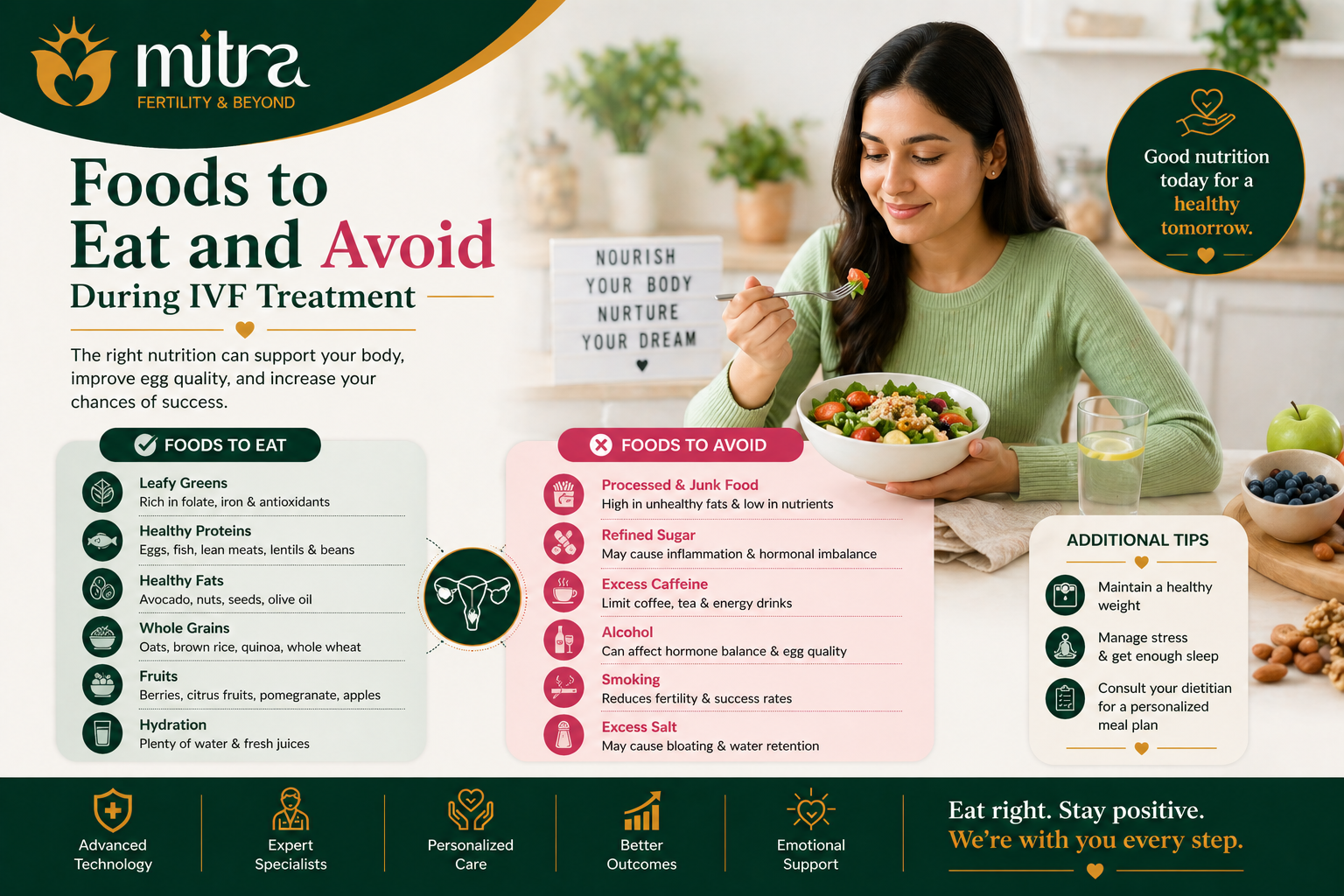
Foods to Eat and Avoid During IVF Treatment
Introduction
When undergoing IVF treatment, every small factor matters—including your diet.
While food alone cannot guarantee success, the right nutrition can support hormone balance, improve egg and sperm quality, and create a healthier environment for implantation.
This guide covers the best foods to eat and what to avoid during IVF treatment, helping you make informed choices throughout your journey.
Why Diet Matters During IVF
IVF involves hormonal stimulation, egg development, and embryo implantation—all of which depend on your body’s internal balance.
A well-planned diet can:
Support reproductive hormones
Improve egg and sperm quality
Reduce inflammation
Enhance overall health during treatment
Support reproductive hormones
Improve egg and sperm quality
Reduce inflammation
Enhance overall health during treatment
Foods to Eat During IVF Treatment
1. Protein-Rich Foods
Protein plays a key role in cell growth and hormone production.
Include:
Eggs
Lean meats
Fish (low mercury)
Lentils and legumes
Dairy products
Eggs
Lean meats
Fish (low mercury)
Lentils and legumes
Dairy products
2. Fresh Fruits and Vegetables
Rich in vitamins, antioxidants, and fiber.
Benefits:
Protect egg and sperm quality
Reduce oxidative stress
Protect egg and sperm quality
Reduce oxidative stress
Best choices:
Leafy greens
Berries
Citrus fruits
Carrots and broccoli
Leafy greens
Berries
Citrus fruits
Carrots and broccoli
3. Whole Grains
Whole grains provide steady energy and support hormonal balance.
Include:
Brown rice
Oats
Whole wheat
Quinoa
Brown rice
Oats
Whole wheat
Quinoa
4. Healthy Fats
Healthy fats are essential for hormone production.
Include:
Nuts and seeds
Avocados
Olive oil
These support reproductive health and reduce inflammation.
Nuts and seeds
Avocados
Olive oil
5. Iron-Rich Foods
Iron supports blood flow and oxygen delivery.
Include:
Spinach
Beans
Lean red meat (in moderation)
Spinach
Beans
Lean red meat (in moderation)
6. Hydration
Staying hydrated is important for overall health and bodily functions.
Aim for:
2–3 liters of water daily
Proper hydration supports nutrient absorption and circulation.
2–3 liters of water daily
Foods to Avoid During IVF Treatment
1. Processed Foods
Avoid:
Packaged snacks
Fast food
Refined sugars
These can disrupt hormone balance and increase inflammation.
Packaged snacks
Fast food
Refined sugars
2. Excess Sugar
High sugar intake can affect insulin levels and hormone regulation.
Limit:
Sweets
Sugary drinks
Desserts
Sweets
Sugary drinks
Desserts
3. Trans Fats
Trans fats negatively impact fertility.
Found in:
Fried foods
Baked goods
Margarine
Fried foods
Baked goods
Margarine
4. High-Mercury Fish
Some fish contain mercury, which can affect reproductive health.
Avoid:
Shark
Swordfish
King mackerel
Choose safer alternatives like salmon or sardines.
Shark
Swordfish
King mackerel
5. Excess Caffeine
Too much caffeine may affect implantation.
Recommended:
Limit to 1–2 cups of coffee per day
Limit to 1–2 cups of coffee per day
6. Alcohol
Alcohol can interfere with hormone balance and reduce IVF success rates.
Best approach:
Avoid completely during treatment
Avoid completely during treatment
Additional Diet Tips During IVF
Eat smaller, balanced meals throughout the day
Include a mix of protein, carbs, and fats in every meal
Avoid skipping meals
Follow your doctor’s nutritional advice if provided
Eat smaller, balanced meals throughout the day
Include a mix of protein, carbs, and fats in every meal
Avoid skipping meals
Follow your doctor’s nutritional advice if provided
Does Diet Affect IVF Success?
Diet alone does not determine IVF success—but it plays a supportive role.
Combined with:
Medical treatment
Lifestyle habits
Proper care
Nutrition helps create the best possible conditions for success.
Medical treatment
Lifestyle habits
Proper care
Common Mistakes to Avoid
Following extreme or restrictive diets
Relying on supplements without medical advice
Ignoring hydration
Making sudden drastic changes
Consistency is more important than perfection.
Following extreme or restrictive diets
Relying on supplements without medical advice
Ignoring hydration
Making sudden drastic changes
Conclusion
The IVF journey is about giving your body the best possible support—and nutrition is a key part of that.
By choosing the right foods and avoiding harmful ones, you can improve your overall health and support your fertility treatment.
Small, mindful choices can make a meaningful difference.