
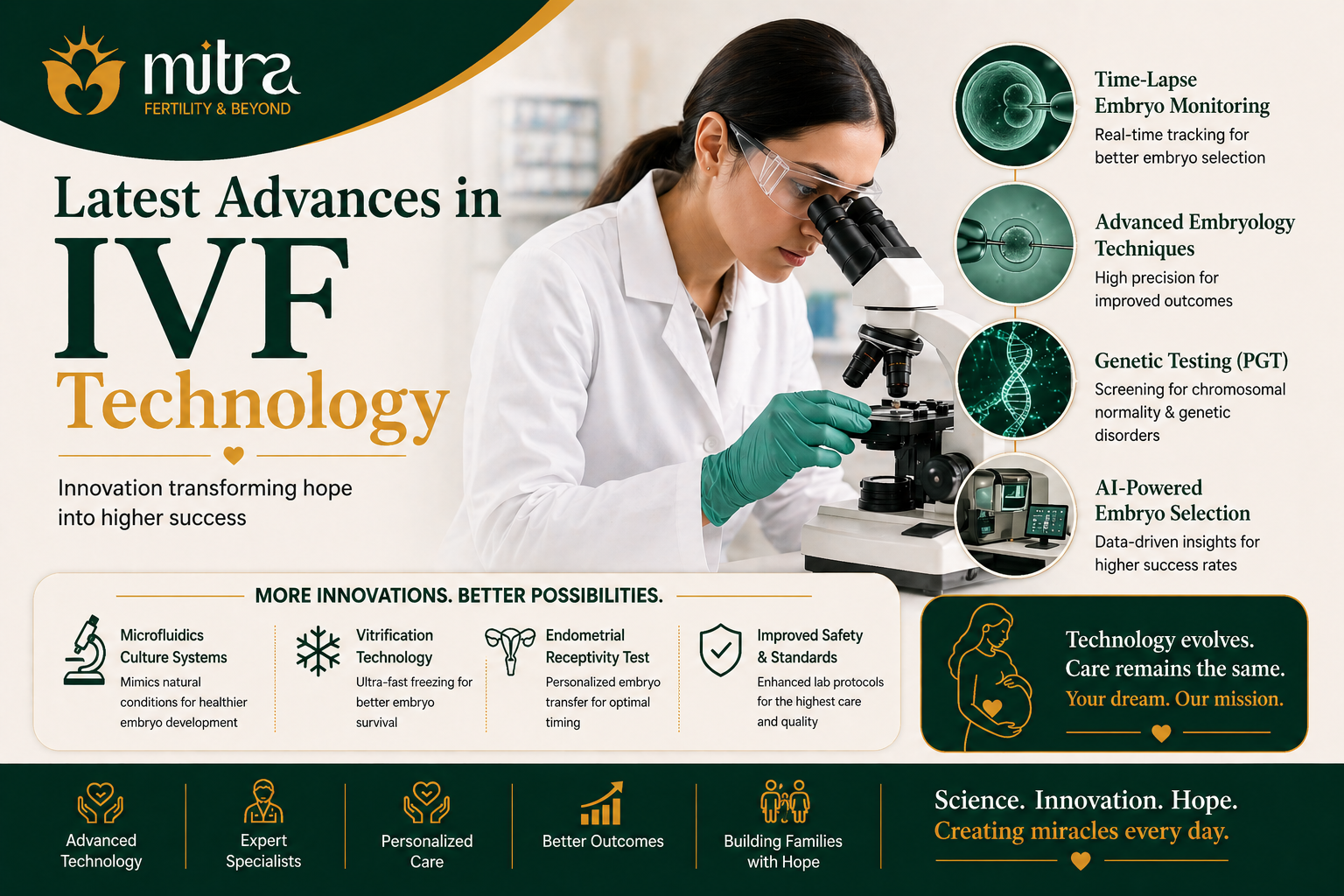
Latest Advances in IVF Technology
Introduction
IVF (In Vitro Fertilization) has come a long way over the past few decades. What was once considered a complex and uncertain procedure has now evolved into a highly advanced, precise, and personalized treatment.
With continuous innovations in medical science, the latest advances in IVF technology are improving success rates, reducing risks, and making the journey smoother for patients.
This blog explores the most recent developments shaping IVF in 2026 and beyond.
Why Innovation Matters in IVF
IVF success depends on multiple factors:
Egg and sperm quality
Embryo development
Uterine environment
Modern technology helps optimize each of these stages, leading to:
Better embryo selection
Improved implantation rates
More predictable outcomes
Egg and sperm quality
Embryo development
Uterine environment
Better embryo selection
Improved implantation rates
More predictable outcomes
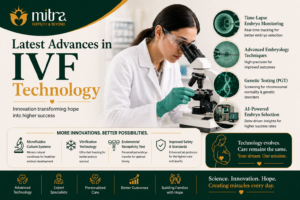
1. AI-Based Embryo Selection
Artificial Intelligence (AI) is transforming embryo selection.
How it works:
AI analyzes embryo images and development patterns
Identifies the embryos with the highest implantation potential
AI analyzes embryo images and development patterns
Identifies the embryos with the highest implantation potential
Benefits:
More accurate selection
Reduced human error
Improved success rates
More accurate selection
Reduced human error
Improved success rates
2. Time-Lapse Embryo Monitoring
Traditional methods check embryos at specific intervals. Now, time-lapse systems provide continuous monitoring.
Advantages:
Tracks embryo development in real time
Helps identify subtle growth patterns
Reduces disturbance to embryos
This allows embryologists to make better decisions.
Tracks embryo development in real time
Helps identify subtle growth patterns
Reduces disturbance to embryos
3. Preimplantation Genetic Testing (PGT)
PGT helps screen embryos for genetic abnormalities before transfer.
Benefits:
Reduces risk of miscarriage
Improves implantation success
Helps select chromosomally normal embryos
It is especially useful in specific cases like advanced maternal age or repeated IVF failures.
Reduces risk of miscarriage
Improves implantation success
Helps select chromosomally normal embryos
4. Improved Freezing Techniques (Vitrification)
Modern freezing methods have significantly improved embryo survival rates.
Key improvements:
Rapid freezing prevents damage
High survival rates after thawing
Better outcomes with frozen embryo transfers (FET)
This has made frozen transfers as effective as fresh ones.
Rapid freezing prevents damage
High survival rates after thawing
Better outcomes with frozen embryo transfers (FET)
5. Personalized IVF Protocols
No two patients are the same—and IVF is becoming more personalized.
What this includes:
Customized hormone stimulation plans
Tailored medication doses
Individualized timing for procedures
Personalization improves both safety and success rates.
Customized hormone stimulation plans
Tailored medication doses
Individualized timing for procedures
6. Advanced Sperm Selection Techniques
New methods help identify the healthiest sperm for fertilization.
Examples:
High-magnification sperm selection
Microfluidic sperm sorting
High-magnification sperm selection
Microfluidic sperm sorting
Benefits:
Better fertilization rates
Improved embryo quality
Better fertilization rates
Improved embryo quality
7. Minimizing Ovarian Hyperstimulation Risks
New protocols reduce the risk of Ovarian Hyperstimulation Syndrome (OHSS).
How:
Safer hormone protocols
Freeze-all strategies when needed
This makes IVF safer and more comfortable.
Safer hormone protocols
Freeze-all strategies when needed
8. Better Uterine Assessment Techniques
Advanced imaging and testing help assess the uterus more accurately.
Benefits:
Improved implantation success
Identification of hidden issues
Better timing of embryo transfer
Improved implantation success
Identification of hidden issues
Better timing of embryo transfer
9. Integration of Data and Predictive Models
Modern IVF clinics use data analytics to predict outcomes.
What this means:
Better treatment planning
More informed decisions
Improved patient counseling
Better treatment planning
More informed decisions
Improved patient counseling
10. Focus on Patient Experience
Beyond medical advancements, IVF is becoming more patient-friendly.
Improvements include:
Less invasive procedures
Better communication and support
Emotional and psychological care
The journey is now more holistic—not just clinical.
Less invasive procedures
Better communication and support
Emotional and psychological care
What Do These Advances Mean for You?
Higher chances of success
Safer treatment experience
More personalized care
Better control over outcomes
These innovations are making IVF more reliable and accessible.
Higher chances of success
Safer treatment experience
More personalized care
Better control over outcomes
Are These Technologies Necessary for Everyone?
Not always.
While advanced technologies can improve outcomes, the right approach depends on:
Your medical condition
Age
Fertility history
A specialist will recommend what’s best for your situation.
Your medical condition
Age
Fertility history
Conclusion
IVF technology is evolving rapidly, offering new possibilities for couples facing fertility challenges.
From AI-driven embryo selection to personalized treatment plans, these advancements are transforming IVF into a more precise and effective solution.
The future of fertility care is not just advanced—it’s smarter, safer, and more personalized.