


Male Infertility: Causes, Tests & Modern Treatments
Introduction
Infertility is often seen as a women’s issue—but in reality, male infertility contributes to nearly 40–50% of all infertility cases.
The good news? With modern diagnostics and advanced treatments, many men can successfully overcome fertility challenges.
This blog explains the causes, tests, and latest treatments for male infertility, helping you understand the right next steps.
What is Male Infertility?
Male infertility refers to a man’s inability to contribute to pregnancy due to problems with sperm production, function, or delivery.
A healthy sperm should have:
Adequate count
Good motility (movement)
Normal morphology (shape)
Any disruption in these can reduce the chances of natural conception.
Adequate count
Good motility (movement)
Normal morphology (shape)
Common Causes of Male Infertility
Male infertility can result from a combination of medical, lifestyle, and environmental factors.
1. Low Sperm Count
One of the most common causes where sperm concentration is below normal levels.
2. Poor Sperm Motility
Sperm may not move effectively, making it difficult to reach and fertilize the egg.
3. Abnormal Sperm Morphology
Irregular shape of sperm can affect fertilization capability.
4. Varicocele
Swelling of veins in the scrotum that affects sperm production and quality.
5. Hormonal Imbalance
Low testosterone or other hormonal issues can interfere with sperm production.
6. Infections
Certain infections can impact sperm health or block sperm delivery.
7. Lifestyle Factors
Smoking
Alcohol consumption
Stress
Poor diet
Lack of exercise
These can significantly affect fertility over time.
Smoking
Alcohol consumption
Stress
Poor diet
Lack of exercise
Tests for Male Infertility
Diagnosing male infertility involves a combination of clinical evaluation and lab tests.
1. Semen Analysis
The most important test that evaluates:
Sperm count
Motility
Morphology
Sperm count
Motility
Morphology
2. Hormone Testing
Checks levels of testosterone and other reproductive hormones.
3. Scrotal Ultrasound
Helps identify conditions like varicocele or structural abnormalities.
4. Genetic Testing
Recommended in certain cases to detect inherited conditions.
5. Advanced Sperm Tests
Includes DNA fragmentation tests for deeper sperm quality analysis.
Modern Treatments for Male Infertility
Advancements in fertility treatments have made it possible to address most male infertility issues effectively.
1. Lifestyle Modifications
Improving diet, reducing stress, and avoiding harmful habits can significantly improve sperm health.
2. Medications
Hormonal treatments or medications may help improve sperm production.
3. Surgical Treatments
Conditions like varicocele can be corrected through minor surgical procedures.
4. IUI (Intrauterine Insemination)
Sperm is processed and placed directly into the uterus to improve chances of fertilization.
5. IVF (In Vitro Fertilization)
Egg and sperm are combined outside the body, and the embryo is transferred into the uterus.
6. ICSI (Intracytoplasmic Sperm Injection)
A single sperm is injected directly into the egg—highly effective for severe male infertility cases.
When Should You See a Specialist?
You should consult a fertility specialist if:
You’ve been trying for over a year without success
There is a known sperm issue
You have a history of medical conditions affecting fertility
You are above 35 and planning for pregnancy
Early diagnosis can significantly improve treatment outcomes.
You’ve been trying for over a year without success
There is a known sperm issue
You have a history of medical conditions affecting fertility
You are above 35 and planning for pregnancy
Can Male Infertility Be Treated?
Yes. In many cases, male infertility is treatable or manageable.
With the right diagnosis and approach:
Natural conception may still be possible
Assisted reproductive techniques can offer high success rates
The key is identifying the root cause early.
Natural conception may still be possible
Assisted reproductive techniques can offer high success rates
Conclusion
Male infertility is more common than many realize—but it is also highly treatable with modern medicine.
Understanding the causes, undergoing the right tests, and choosing appropriate treatment can make a significant difference in your fertility journey.

PCOS Has Been Renamed PMOS — Here’s What It Means for Your Fertility
If you have PCOS — or think you might — there is news you need to know about. Yesterday, 12 May 2026, one of the
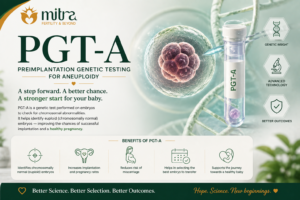
PGT-A in IVF: Understanding Genetic Embryo Screening
Blogs and Resources PGT-A in IVF: Understanding Genetic Embryo Screening Book Appointment PGT-A in IVF: Understanding Genetic Embryo Screening Introduction IVF treatment has advanced significantly
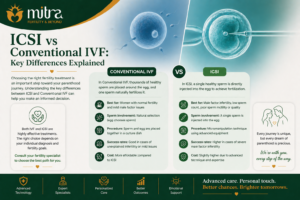
ICSI vs Conventional IVF: Key Differences Explained
Blogs and Resources ICSI vs Conventional IVF: Key Differences Explained Book Appointment ICSI vs Conventional IVF: Key Differences Explained Introduction When exploring fertility treatments, many

Failed IVF Cycle: Reasons & Next Steps
Blogs and Resources Failed IVF Cycle: Reasons & Next Steps Book Appointment Failed IVF Cycle: Reasons & Next Steps Introduction A failed IVF cycle can

Common IVF Mistakes That Reduce Success Rates
Blogs and Resources Common IVF Mistakes That Reduce Success Rates Book Appointment Common IVF Mistakes That Reduce Success Rates Introduction IVF (In Vitro Fertilization) has

Boost Your Fertility: Lifestyle & Health Tips for Trying to Conceive
Blogs and Resources Boost Your Fertility: Lifestyle & Health Tips for Trying to Conceive Book Appointment Boost Your Fertility: Lifestyle & Health Tips for Trying

Lifestyle Changes That Can Boost Fertility Naturally
Blogs and Resources Lifestyle Changes That Can Boost Fertility Naturally Book Appointment Lifestyle Changes That Can Boost Fertility Naturally Introduction Fertility is not just about

Foods to Eat and Avoid During IVF Treatment
Blogs and Resources Foods to Eat and Avoid During IVF Treatment Book Appointment Foods to Eat and Avoid During IVF Treatment Introduction When undergoing IVF

PCOS and Infertility: Latest Treatment Options
Blogs and Resources PCOS and Infertility: Latest Treatment Options Book Appointment PCOS and Infertility: Latest Treatment Options Introduction Polycystic Ovary Syndrome (PCOS) is one of

Latest Advances in IVF Technology
Blogs and Resources Latest Advances in IVF Technology Book Appointment Latest Advances in IVF Technology Introduction IVF (In Vitro Fertilization) has come a long way