

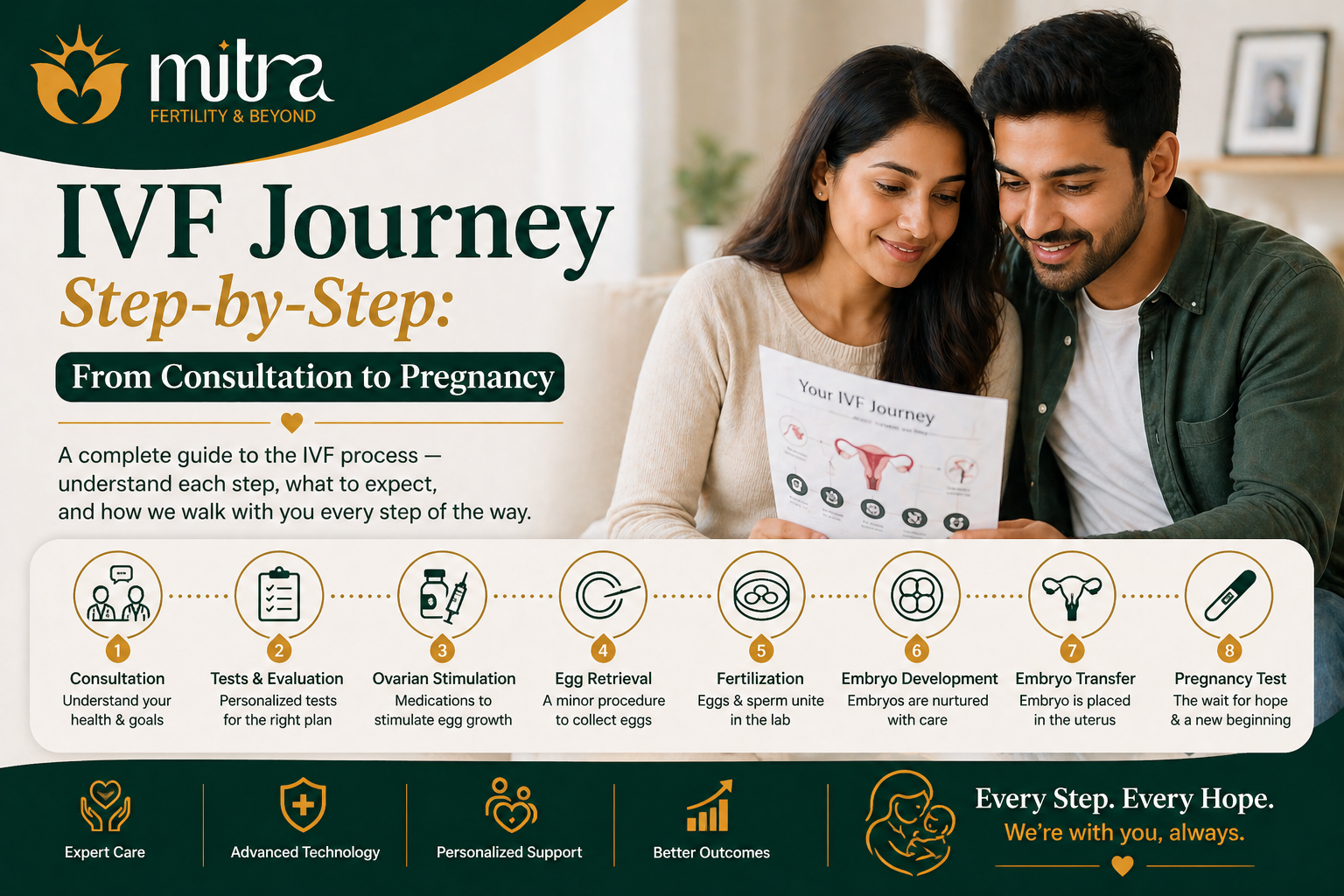
IVF Journey Step-by-Step: From Consultation to Pregnancy
Introduction
Starting IVF can feel overwhelming—there are medical terms, multiple steps, and emotional decisions involved.
But when you break it down, the IVF journey follows a clear, structured process.
Understanding each stage helps reduce anxiety and prepares you for what to expect—from your first consultation to a confirmed pregnancy.
What is IVF?
IVF (In Vitro Fertilization) is a fertility treatment where:
Eggs are retrieved from the ovaries
Fertilized with sperm in a lab
The resulting embryo is transferred into the uterus
It is one of the most effective treatments for various infertility conditions.
Eggs are retrieved from the ovaries
Fertilized with sperm in a lab
The resulting embryo is transferred into the uterus
Step 1: Initial Consultation & Evaluation
Your IVF journey begins with a detailed consultation.
What happens:
Medical history review
Discussion of fertility concerns
Planning initial tests
Medical history review
Discussion of fertility concerns
Planning initial tests
Common tests include:
Hormone tests
Ultrasound scans
Semen analysis
This step helps doctors understand the root cause and plan your treatment.
Hormone tests
Ultrasound scans
Semen analysis
Step 2: Fertility Testing & Treatment Planning
Based on test results, a personalized IVF plan is created.
This includes:
Medication protocol
Timeline of treatment
Dosage and monitoring plan
Every IVF journey is customized—there is no one-size-fits-all approach.
Medication protocol
Timeline of treatment
Dosage and monitoring plan
Step 3: Ovarian Stimulation
You will receive hormonal injections for about 8–12 days.
Purpose:
Stimulate ovaries to produce multiple eggs
Increase chances of successful fertilization
Stimulate ovaries to produce multiple eggs
Increase chances of successful fertilization
Monitoring:
Regular ultrasounds
Blood tests
Doctors track follicle growth closely during this phase.
Regular ultrasounds
Blood tests
Step 4: Egg Retrieval (OPU – Ovum Pick-Up)
Once the eggs are ready, they are collected through a minor procedure.
Key points:
Performed under mild anesthesia
Takes about 15–30 minutes
No major downtime
The eggs are immediately sent to the lab.
Performed under mild anesthesia
Takes about 15–30 minutes
No major downtime
Step 5: Fertilization in the Lab
The retrieved eggs are fertilized with sperm.
Methods:
Conventional IVF
ICSI (injecting a single sperm into the egg)
The goal is to create healthy embryos.
Conventional IVF
ICSI (injecting a single sperm into the egg)
Step 6: Embryo Development
Fertilized eggs are monitored for 3–5 days.
What doctors assess:
Embryo quality
Cell division
Growth patterns
The best-quality embryo is selected for transfer.
Embryo quality
Cell division
Growth patterns
Step 7: Embryo Transfer
The embryo is placed into the uterus using a simple, painless procedure.
Key points:
No anesthesia required
Takes only a few minutes
Similar to a routine scan
After transfer, the focus shifts to implantation.
No anesthesia required
Takes only a few minutes
Similar to a routine scan
Step 8: The Waiting Period (Two-Week Wait)
This is often the most emotionally challenging phase.
What happens:
Embryo attempts to implant in the uterus
Hormonal support medications are given
Patients are advised to:
Stay relaxed
Avoid stress
Follow medical guidance strictly
Embryo attempts to implant in the uterus
Hormonal support medications are given
Stay relaxed
Avoid stress
Follow medical guidance strictly
Step 9: Pregnancy Test
About 10–14 days after embryo transfer, a blood test confirms pregnancy.
Possible outcomes:
Positive result → Pregnancy confirmed
Negative result → Next steps discussed
Positive result → Pregnancy confirmed
Negative result → Next steps discussed
Step 10: Early Pregnancy Care
If the test is positive:
Hormone support continues
Regular monitoring begins
Ultrasound confirms fetal development
This stage ensures a healthy progression of pregnancy.
Hormone support continues
Regular monitoring begins
Ultrasound confirms fetal development
How Long Does the IVF Process Take?
A typical IVF cycle takes 4 to 6 weeks from start to pregnancy test.
However, timelines may vary based on individual treatment plans.
Emotional Side of the IVF Journey
IVF is not just physical—it’s emotional too.
It’s normal to feel:
Hopeful
Anxious
Overwhelmed
Having the right support system and clear guidance makes a big difference.
Hopeful
Anxious
Overwhelmed
Tips for a Smooth IVF Journey
Follow your treatment plan strictly
Maintain a healthy lifestyle
Stay informed—but avoid overthinking
Communicate openly with your doctor
Take emotional support when needed
Follow your treatment plan strictly
Maintain a healthy lifestyle
Stay informed—but avoid overthinking
Communicate openly with your doctor
Take emotional support when needed
Conclusion
The IVF journey may seem complex—but step by step, it becomes manageable.
From consultation to pregnancy, each stage is designed to improve your chances of success.
Understanding the process helps you move forward with confidence, clarity, and realistic expectations.
PCOS Has Been Renamed PMOS — Here’s What It Means for Your Fertility
If you have PCOS — or think you might — there is news you need to know about. Yesterday, 12 May 2026, one of the
PGT-A in IVF: Understanding Genetic Embryo Screening
Blogs and Resources PGT-A in IVF: Understanding Genetic Embryo Screening Book Appointment PGT-A in IVF: Understanding Genetic Embryo Screening Introduction IVF treatment has advanced significantly
ICSI vs Conventional IVF: Key Differences Explained
Blogs and Resources ICSI vs Conventional IVF: Key Differences Explained Book Appointment ICSI vs Conventional IVF: Key Differences Explained Introduction When exploring fertility treatments, many
Failed IVF Cycle: Reasons & Next Steps
Blogs and Resources Failed IVF Cycle: Reasons & Next Steps Book Appointment Failed IVF Cycle: Reasons & Next Steps Introduction A failed IVF cycle can
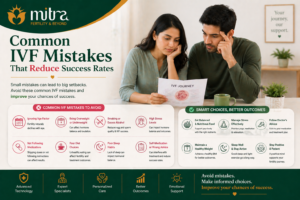
Common IVF Mistakes That Reduce Success Rates
Blogs and Resources Common IVF Mistakes That Reduce Success Rates Book Appointment Common IVF Mistakes That Reduce Success Rates Introduction IVF (In Vitro Fertilization) has

Boost Your Fertility: Lifestyle & Health Tips for Trying to Conceive
Blogs and Resources Boost Your Fertility: Lifestyle & Health Tips for Trying to Conceive Book Appointment Boost Your Fertility: Lifestyle & Health Tips for Trying

Lifestyle Changes That Can Boost Fertility Naturally
Blogs and Resources Lifestyle Changes That Can Boost Fertility Naturally Book Appointment Lifestyle Changes That Can Boost Fertility Naturally Introduction Fertility is not just about

Foods to Eat and Avoid During IVF Treatment
Blogs and Resources Foods to Eat and Avoid During IVF Treatment Book Appointment Foods to Eat and Avoid During IVF Treatment Introduction When undergoing IVF
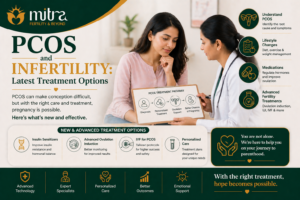
PCOS and Infertility: Latest Treatment Options
Blogs and Resources PCOS and Infertility: Latest Treatment Options Book Appointment PCOS and Infertility: Latest Treatment Options Introduction Polycystic Ovary Syndrome (PCOS) is one of
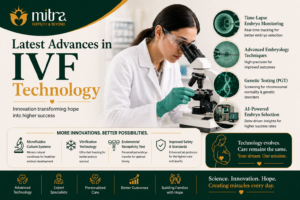
Latest Advances in IVF Technology
Blogs and Resources Latest Advances in IVF Technology Book Appointment Latest Advances in IVF Technology Introduction IVF (In Vitro Fertilization) has come a long way