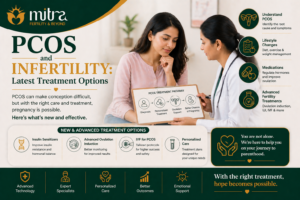

PCOS and Infertility: Latest Treatment Options
Introduction
Polycystic Ovary Syndrome (PCOS) is one of the most common hormonal conditions affecting women of reproductive age—and a leading cause of infertility.
But having PCOS doesn’t mean you can’t get pregnant.
With the right diagnosis and treatment, many women with PCOS successfully conceive. This blog explains how PCOS affects fertility and the latest treatment options available today.
What is PCOS?
PCOS is a hormonal disorder where the ovaries may produce excess androgens (male hormones), leading to:
Irregular or absent periods
Multiple small follicles in the ovaries
Difficulty in ovulation
These factors can make conception challenging.
Irregular or absent periods
Multiple small follicles in the ovaries
Difficulty in ovulation
How Does PCOS Cause Infertility?
PCOS affects fertility mainly by disrupting ovulation.
Key reasons:
Irregular ovulation or no ovulation
Hormonal imbalance
Poor egg maturation
Insulin resistance affecting hormone levels
Without regular ovulation, the chances of natural conception reduce.
Irregular ovulation or no ovulation
Hormonal imbalance
Poor egg maturation
Insulin resistance affecting hormone levels
Can You Get Pregnant with PCOS?
Yes. Many women with PCOS conceive successfully—with or without medical treatment.
With proper care, 70–80% of women with PCOS can achieve pregnancy over time.
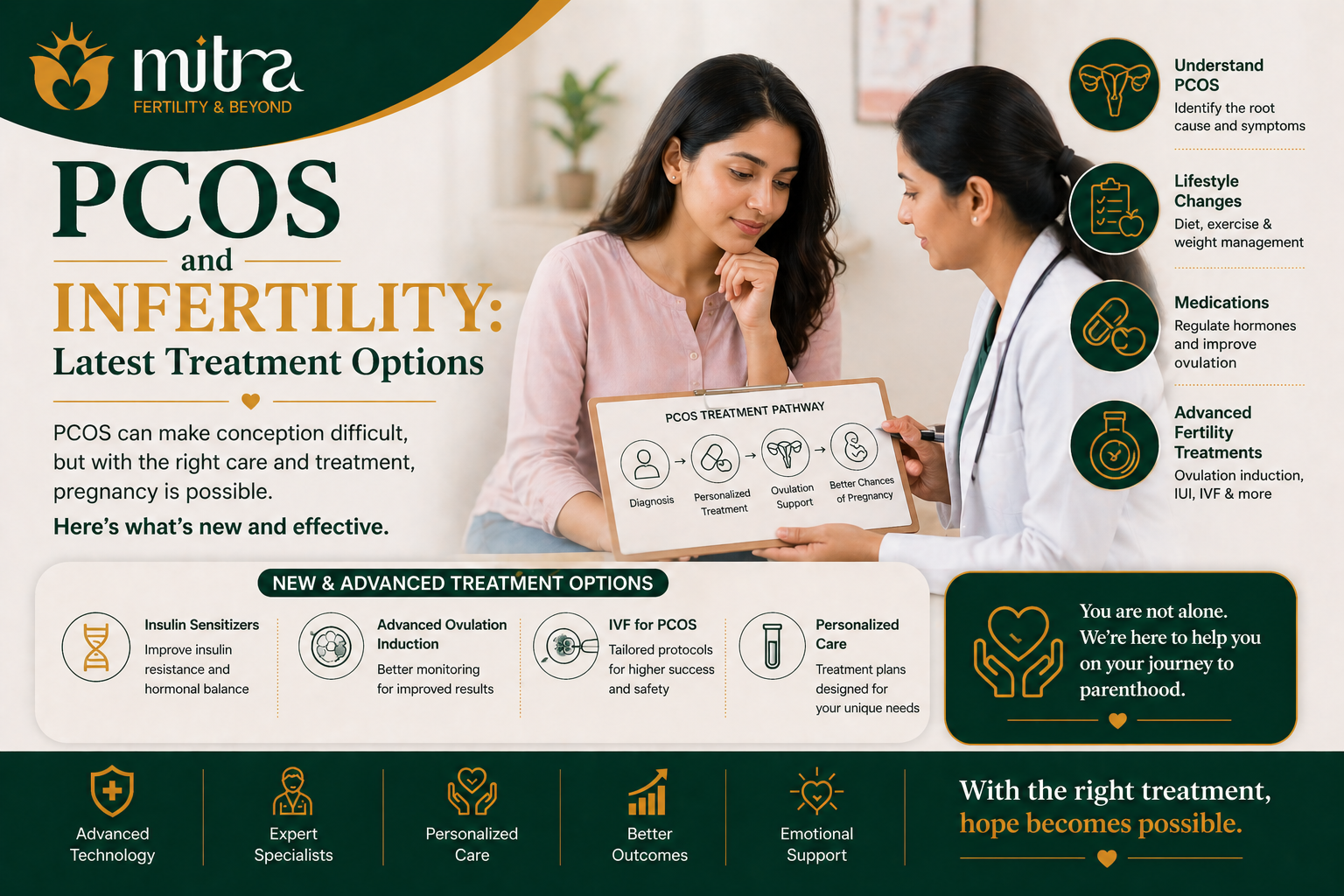
Latest Treatment Options for PCOS and Infertility
Advancements in fertility care have made PCOS management more effective than ever.
1. Lifestyle Modifications
Often the first step in treatment.
Includes:
Weight management
Balanced diet
Regular exercise
Even a 5–10% weight loss can improve ovulation and hormone balance.
Weight management
Balanced diet
Regular exercise
2. Ovulation Induction Medications
These medications help stimulate ovulation.
Common options:
Letrozole (first-line treatment)
Clomiphene citrate
These improve the chances of releasing a healthy egg.
Letrozole (first-line treatment)
Clomiphene citrate
3. Insulin-Sensitizing Medications
For women with insulin resistance, medications like metformin may help regulate hormones and improve ovulation.
4. IUI (Intrauterine Insemination)
IUI may be recommended when:
Ovulation is induced
Timing needs to be optimized
It increases the chances of fertilization by placing sperm directly into the uterus.
Ovulation is induced
Timing needs to be optimized
5. IVF (In Vitro Fertilization)
IVF is one of the most effective treatments for PCOS-related infertility.
Benefits:
Controlled ovulation
Better embryo selection
Higher success rates
IVF is often recommended if other treatments are unsuccessful.
Controlled ovulation
Better embryo selection
Higher success rates
6. Advanced Techniques (2026 Trends)
Modern fertility treatments now include:
AI-assisted embryo selection
Personalized stimulation protocols
Improved hormone monitoring
These advancements improve success rates and reduce risks like ovarian hyperstimulation.
AI-assisted embryo selection
Personalized stimulation protocols
Improved hormone monitoring
Managing PCOS for Better Fertility Outcomes
Beyond treatment, long-term management is key.
Helpful practices:
Maintain a healthy BMI
Reduce sugar and processed food intake
Stay physically active
Manage stress levels
Monitor menstrual cycles
Consistency plays a major role in improving fertility.
Maintain a healthy BMI
Reduce sugar and processed food intake
Stay physically active
Manage stress levels
Monitor menstrual cycles
When Should You See a Specialist?
Consult a fertility specialist if:
You have irregular or absent periods
You’ve been trying to conceive without success
You have been diagnosed with PCOS
Early evaluation helps in choosing the right treatment approach.
You have irregular or absent periods
You’ve been trying to conceive without success
You have been diagnosed with PCOS
Common Myths About PCOS and Fertility
Myth 1: PCOS Means You Can’t Get Pregnant
Fact: Many women with PCOS conceive successfully.
Myth 2: Weight is the Only Issue
Fact: PCOS is hormonal—weight is just one factor.
Myth 3: IVF is the Only Option
Fact: Many cases respond well to simpler treatments.
Conclusion
PCOS can make conception more challenging—but it is manageable and treatable.
With the right approach, timely intervention, and lifestyle support, achieving pregnancy is very much possible.