

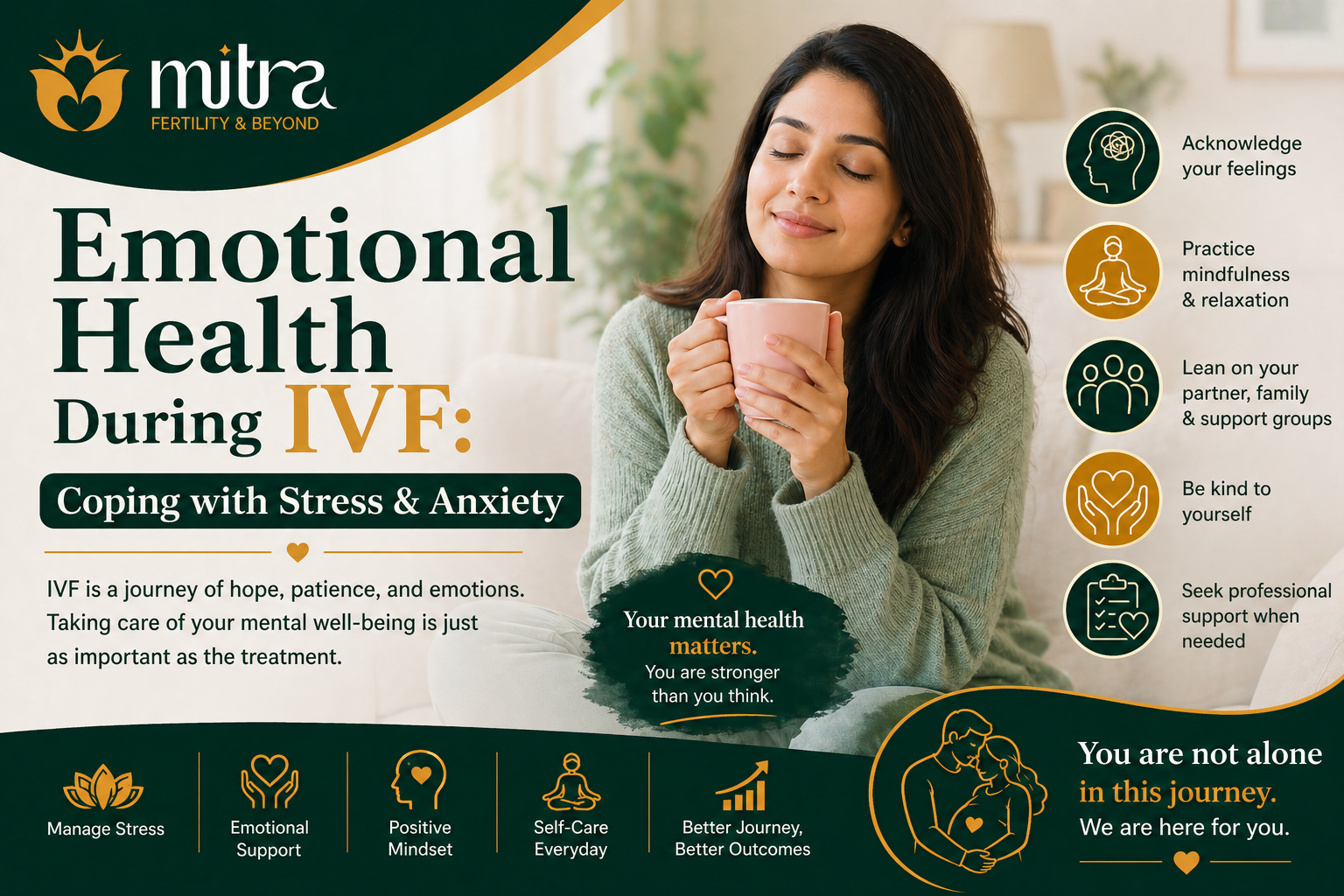
Emotional Health During IVF: Coping with Stress & Anxiety
Introduction
The IVF journey is not just a physical process—it’s an emotional one.
From hope and anticipation to anxiety and uncertainty, it’s completely normal to experience a wide range of emotions during IVF. While medical care focuses on your body, emotional health plays an equally important role in your overall well-being.
This guide helps you understand how to cope with stress and anxiety during IVF and navigate the journey with greater balance.
Why Emotional Health Matters During IVF
IVF involves:
Multiple appointments
Hormonal changes
Waiting periods
Uncertain outcomes
All of these can create emotional pressure.
Managing your mental well-being helps you:
Stay calm and focused
Handle uncertainty better
Improve overall treatment experience
Multiple appointments
Hormonal changes
Waiting periods
Uncertain outcomes
Stay calm and focused
Handle uncertainty better
Improve overall treatment experience
Common Emotional Challenges During IVF
It’s important to recognize what you’re feeling.
You may experience:
Anxiety about results
Fear of failure
Emotional ups and downs due to hormones
Stress from timelines and expectations
Feeling isolated or misunderstood
These feelings are valid—and you’re not alone in this.
Anxiety about results
Fear of failure
Emotional ups and downs due to hormones
Stress from timelines and expectations
Feeling isolated or misunderstood
1. Accept Your Emotions
Trying to stay “strong” all the time can be exhausting.
What helps:
Acknowledge your feelings
Allow yourself to feel without guilt
Understand that emotional ups and downs are part of the process
Acceptance reduces internal pressure.
Acknowledge your feelings
Allow yourself to feel without guilt
Understand that emotional ups and downs are part of the process
2. Build a Support System
Having the right people around you makes a big difference.
Support can come from:
Your partner
Family members
Close friends
Fertility counselors
Talking openly helps you feel less alone.
Your partner
Family members
Close friends
Fertility counselors
3. Limit Information Overload
Constantly searching online can increase anxiety.
What to do:
Avoid comparing your journey with others
Stick to trusted medical advice
Set boundaries on how much information you consume
Focus on your own process.
Avoid comparing your journey with others
Stick to trusted medical advice
Set boundaries on how much information you consume
4. Practice Stress-Relief Techniques
Simple practices can help you stay grounded.
Try:
Meditation or mindfulness
Gentle yoga
Breathing exercises
Light physical activity
Even 10–15 minutes a day can help calm your mind.
Meditation or mindfulness
Gentle yoga
Breathing exercises
Light physical activity
5. Maintain a Routine
IVF can disrupt your daily life.
Staying consistent helps:
Follow a simple daily routine
Continue normal activities when possible
Keep your mind engaged
Structure brings stability.
Follow a simple daily routine
Continue normal activities when possible
Keep your mind engaged
6. Communicate with Your Partner
IVF is a shared journey.
Important:
Talk openly about your feelings
Support each other without pressure
Understand that both partners may cope differently
Strong communication builds emotional strength.
Talk openly about your feelings
Support each other without pressure
Understand that both partners may cope differently
7. Take Breaks When Needed
It’s okay to step back mentally.
You can:
Take short breaks from thinking about IVF
Engage in hobbies or activities you enjoy
Spend time in a relaxed environment
This helps reset your emotional state.
Take short breaks from thinking about IVF
Engage in hobbies or activities you enjoy
Spend time in a relaxed environment
8. Seek Professional Support
If stress feels overwhelming, consider talking to a professional.
Options include:
Fertility counselors
Therapists
Support groups
Guidance can help you process emotions more effectively.
Fertility counselors
Therapists
Support groups
9. Manage Expectations
IVF is a process—not a guaranteed outcome.
Keep in mind:
Success may take time
Multiple cycles may be needed
Every journey is different
Realistic expectations reduce emotional pressure.
Success may take time
Multiple cycles may be needed
Every journey is different
10. Focus on What You Can Control
There are many uncertainties in IVF—but some things are in your control.
Focus on:
Following your treatment plan
Maintaining a healthy lifestyle
Taking care of your mental well-being
This gives you a sense of stability and confidence.
Following your treatment plan
Maintaining a healthy lifestyle
Taking care of your mental well-being
When to Seek Help
Consider additional support if:
Anxiety is constant or overwhelming
You feel emotionally drained
It’s affecting your daily life or relationships
Early support can make a significant difference.
Anxiety is constant or overwhelming
You feel emotionally drained
It’s affecting your daily life or relationships
Conclusion
The IVF journey can be emotionally challenging—but you don’t have to go through it alone.
By acknowledging your feelings, building support, and practicing self-care, you can navigate this phase with greater strength and balance.
Your emotional well-being is just as important as your physical health—take care of both.

PCOS Has Been Renamed PMOS — Here’s What It Means for Your Fertility
If you have PCOS — or think you might — there is news you need to know about. Yesterday, 12 May 2026, one of the

PGT-A in IVF: Understanding Genetic Embryo Screening
Blogs and Resources PGT-A in IVF: Understanding Genetic Embryo Screening Book Appointment PGT-A in IVF: Understanding Genetic Embryo Screening Introduction IVF treatment has advanced significantly
ICSI vs Conventional IVF: Key Differences Explained
Blogs and Resources ICSI vs Conventional IVF: Key Differences Explained Book Appointment ICSI vs Conventional IVF: Key Differences Explained Introduction When exploring fertility treatments, many
Failed IVF Cycle: Reasons & Next Steps
Blogs and Resources Failed IVF Cycle: Reasons & Next Steps Book Appointment Failed IVF Cycle: Reasons & Next Steps Introduction A failed IVF cycle can
Common IVF Mistakes That Reduce Success Rates
Blogs and Resources Common IVF Mistakes That Reduce Success Rates Book Appointment Common IVF Mistakes That Reduce Success Rates Introduction IVF (In Vitro Fertilization) has

Boost Your Fertility: Lifestyle & Health Tips for Trying to Conceive
Blogs and Resources Boost Your Fertility: Lifestyle & Health Tips for Trying to Conceive Book Appointment Boost Your Fertility: Lifestyle & Health Tips for Trying

Lifestyle Changes That Can Boost Fertility Naturally
Blogs and Resources Lifestyle Changes That Can Boost Fertility Naturally Book Appointment Lifestyle Changes That Can Boost Fertility Naturally Introduction Fertility is not just about

Foods to Eat and Avoid During IVF Treatment
Blogs and Resources Foods to Eat and Avoid During IVF Treatment Book Appointment Foods to Eat and Avoid During IVF Treatment Introduction When undergoing IVF
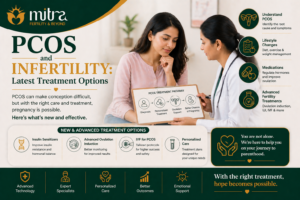
PCOS and Infertility: Latest Treatment Options
Blogs and Resources PCOS and Infertility: Latest Treatment Options Book Appointment PCOS and Infertility: Latest Treatment Options Introduction Polycystic Ovary Syndrome (PCOS) is one of

Latest Advances in IVF Technology
Blogs and Resources Latest Advances in IVF Technology Book Appointment Latest Advances in IVF Technology Introduction IVF (In Vitro Fertilization) has come a long way