


Best Age for IVF: Facts vs Myths
Introduction
When it comes to IVF, one of the most common questions is:
“What is the best age for IVF?”
While many assume IVF can work at any age, the reality is more nuanced. Age plays a critical role in fertility, egg quality, and overall IVF success rates.
This blog breaks down the facts vs myths around IVF age, helping you understand when to start IVF and what to realistically expect.
“What is the best age for IVF?”
What is the Best Age for IVF?
The ideal age for IVF treatment is generally considered to be between 25 and 35 years.
During this period:
Egg quality is at its peak
Ovarian reserve is higher
Hormonal balance supports implantation
This leads to the highest IVF success rates by age group.
Egg quality is at its peak
Ovarian reserve is higher
Hormonal balance supports implantation
IVF Success Rates by Age
Age directly impacts the success of IVF. Here’s a realistic breakdown:
Under 30 years: 60% – 65% success rate
30–35 years: 50% – 60%
35–40 years: 40% – 50%
Above 40 years: 20% – 35%
After 35, fertility begins to decline more rapidly, especially due to reduced egg quality.
Under 30 years: 60% – 65% success rate
30–35 years: 50% – 60%
35–40 years: 40% – 50%
Above 40 years: 20% – 35%
Understanding the IVF Age Factor
The IVF age factor isn’t just about numbers—it’s about biology.
Why Age Matters:
Women are born with a fixed number of eggs
Egg quality declines with age
Higher risk of chromosomal abnormalities after 35
Lower implantation success in later years
This is why early evaluation is always recommended, even if you’re not planning immediate treatment.
Women are born with a fixed number of eggs
Egg quality declines with age
Higher risk of chromosomal abnormalities after 35
Lower implantation success in later years
Fertility Age Limit for IVF
There is no strict “cut-off” age for IVF, but practical limits exist.
Many clinics recommend IVF up to 45–50 years, depending on health conditions
After 40, donor eggs are often suggested for better success rates
Medical fitness becomes equally important as age
So while IVF is possible later in life, outcomes may vary significantly.
Many clinics recommend IVF up to 45–50 years, depending on health conditions
After 40, donor eggs are often suggested for better success rates
Medical fitness becomes equally important as age
When to Start IVF?
Knowing when to start IVF depends on individual circumstances:
You may consider IVF if:
You’ve been trying for 1 year (under 35) without success
Trying for 6 months (above 35) without success
Diagnosed with PCOS, endometriosis, or low ovarian reserve
Male infertility factors are present
Blocked fallopian tubes or unexplained infertility
Early consultation doesn’t mean immediate IVF—but it helps you plan better.
You’ve been trying for 1 year (under 35) without success
Trying for 6 months (above 35) without success
Diagnosed with PCOS, endometriosis, or low ovarian reserve
Male infertility factors are present
Blocked fallopian tubes or unexplained infertility
Common Myths About IVF Age
Myth 1: IVF Works at Any Age
Fact: Success declines with age, especially after 35.
Myth 2: IVF Guarantees Pregnancy
Fact: IVF improves chances but doesn’t guarantee success.
Myth 3: You Should Wait Until It’s the Last Option
Fact: Waiting too long can reduce your chances significantly.
Myth 4: Only Women’s Age Matters
Fact: Male age also affects sperm quality and embryo health.
How to Improve IVF Outcomes at Any Age
While age cannot be changed, outcomes can still be optimized:
Maintain a healthy lifestyle
Follow medical guidance strictly
Choose a well-equipped fertility center
Consider fertility preservation (egg freezing) if delaying pregnancy
Explore advanced options like genetic testing if needed
Maintain a healthy lifestyle
Follow medical guidance strictly
Choose a well-equipped fertility center
Consider fertility preservation (egg freezing) if delaying pregnancy
Explore advanced options like genetic testing if needed
Conclusion
The best age for IVF is not just a number—it’s a window where your body is most responsive to treatment.
While IVF has made pregnancy possible at later ages, starting at the right time significantly improves your chances.
If you’re unsure about your fertility timeline, the smartest first step is not treatment—it’s awareness and evaluation.
PCOS Has Been Renamed PMOS — Here’s What It Means for Your Fertility
If you have PCOS — or think you might — there is news you need to know about. Yesterday, 12 May 2026, one of the
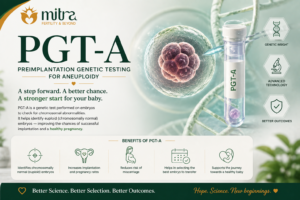
PGT-A in IVF: Understanding Genetic Embryo Screening
Blogs and Resources PGT-A in IVF: Understanding Genetic Embryo Screening Book Appointment PGT-A in IVF: Understanding Genetic Embryo Screening Introduction IVF treatment has advanced significantly
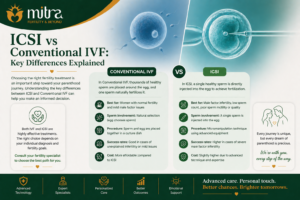
ICSI vs Conventional IVF: Key Differences Explained
Blogs and Resources ICSI vs Conventional IVF: Key Differences Explained Book Appointment ICSI vs Conventional IVF: Key Differences Explained Introduction When exploring fertility treatments, many

Failed IVF Cycle: Reasons & Next Steps
Blogs and Resources Failed IVF Cycle: Reasons & Next Steps Book Appointment Failed IVF Cycle: Reasons & Next Steps Introduction A failed IVF cycle can

Common IVF Mistakes That Reduce Success Rates
Blogs and Resources Common IVF Mistakes That Reduce Success Rates Book Appointment Common IVF Mistakes That Reduce Success Rates Introduction IVF (In Vitro Fertilization) has

Boost Your Fertility: Lifestyle & Health Tips for Trying to Conceive
Blogs and Resources Boost Your Fertility: Lifestyle & Health Tips for Trying to Conceive Book Appointment Boost Your Fertility: Lifestyle & Health Tips for Trying

Lifestyle Changes That Can Boost Fertility Naturally
Blogs and Resources Lifestyle Changes That Can Boost Fertility Naturally Book Appointment Lifestyle Changes That Can Boost Fertility Naturally Introduction Fertility is not just about

Foods to Eat and Avoid During IVF Treatment
Blogs and Resources Foods to Eat and Avoid During IVF Treatment Book Appointment Foods to Eat and Avoid During IVF Treatment Introduction When undergoing IVF
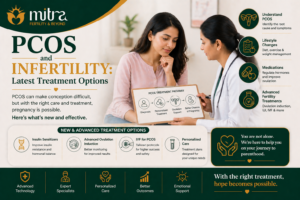
PCOS and Infertility: Latest Treatment Options
Blogs and Resources PCOS and Infertility: Latest Treatment Options Book Appointment PCOS and Infertility: Latest Treatment Options Introduction Polycystic Ovary Syndrome (PCOS) is one of
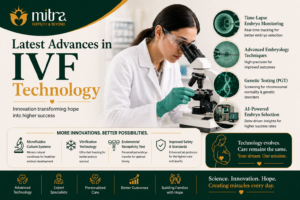
Latest Advances in IVF Technology
Blogs and Resources Latest Advances in IVF Technology Book Appointment Latest Advances in IVF Technology Introduction IVF (In Vitro Fertilization) has come a long way