
PGT-A in IVF: Understanding Genetic Embryo Screening
Introduction
IVF treatment has advanced significantly over the years, improving the chances of achieving a healthy pregnancy. One of the most important advancements in modern fertility care is PGT-A (Preimplantation Genetic Testing for Aneuploidy).
PGT-A helps fertility specialists identify embryos with the correct number of chromosomes before embryo transfer, improving embryo selection and reducing certain pregnancy risks.
This blog explains:
What PGT-A is
How it works
Who may benefit from it
Its advantages and limitations
What Is PGT-A?
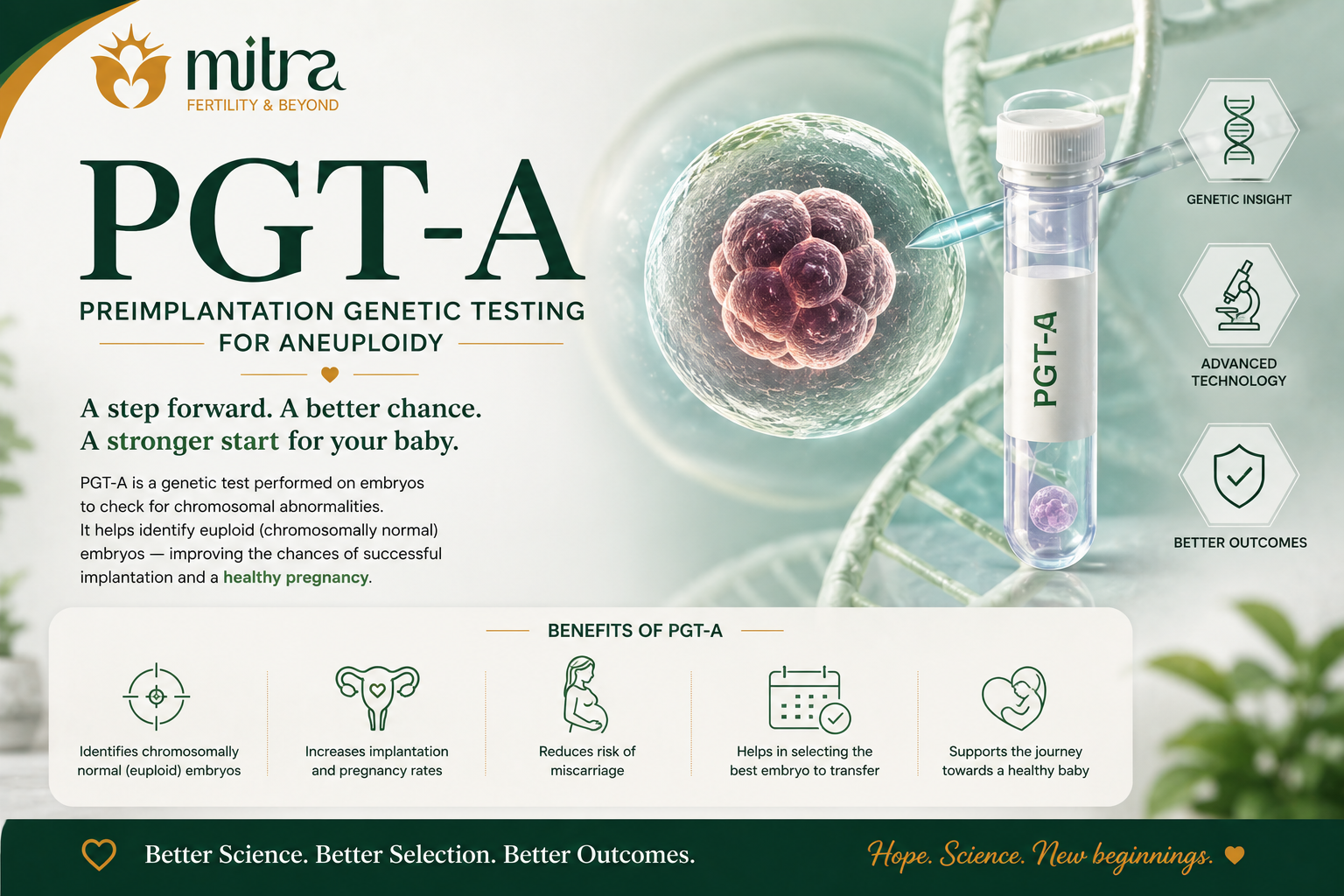
PGT-A is a genetic screening test performed during an IVF cycle to evaluate embryos for chromosomal abnormalities.
A normal embryo typically contains:
46 chromosomes
23 from the egg
23 from the sperm
When embryos have missing or extra chromosomes, implantation may fail or miscarriage risk may increase.
PGT-A helps identify embryos that are more likely to result in a healthy pregnancy.
What Does “Aneuploidy” Mean?
Aneuploidy refers to an abnormal number of chromosomes.
Examples include:
Missing chromosomes
Extra chromosomes
Chromosomal imbalance
These abnormalities can affect:
Implantation success
Pregnancy progression
Embryo development
How PGT-A Works in IVF
Step 1: IVF & Embryo Development
Eggs are retrieved and fertilized in the laboratory.
Embryos are allowed to grow for about:
5 to 6 days (blastocyst stage)
Step 2: Embryo Biopsy
A few cells are carefully removed from the outer layer of the embryo.
This procedure does not usually harm embryo development when performed correctly.
Step 3: Genetic Testing
The biopsied cells are analyzed in a genetics laboratory to evaluate chromosome numbers.
Embryos are categorized as:
Chromosomally normal (euploid)
Chromosomally abnormal (aneuploid)
Mosaic (mixed cell population)
Step 4: Embryo Freezing
Embryos are frozen while waiting for results.
Step 5: Embryo Transfer
The healthiest chromosomally normal embryo is selected for transfer.
Who May Benefit from PGT-A?
PGT-A is not necessary for every patient, but it may be recommended in certain situations.
Common indications include:
Advanced Maternal Age
Egg quality and chromosomal abnormalities increase with age.
Recurrent IVF Failure
Repeated failed implantation may sometimes be related to embryo chromosomal issues.
Recurrent Miscarriages
PGT-A may help reduce miscarriage risk associated with abnormal embryos.
Severe Male Factor Infertility
Some sperm abnormalities may affect embryo quality.
Multiple Embryos Available
PGT-A helps identify the most viable embryo for transfer.
Benefits of PGT-A
Improved Embryo Selection
Helps choose embryos with higher implantation potential.
Reduced Risk of Miscarriage
Chromosomal abnormalities are one of the most common causes of miscarriage.
Better Pregnancy Planning
Supports more informed treatment decisions.
Potentially Shorter Time to Pregnancy
Selecting healthier embryos may reduce unsuccessful transfer attempts.
Supports Single Embryo Transfer
Can reduce the need for multiple embryo transfers.
Does PGT-A Guarantee Pregnancy?
No.
PGT-A improves embryo selection, but pregnancy success still depends on:
Uterine health
Hormonal balance
Implantation factors
Overall reproductive health
Even a genetically normal embryo may not always implant successfully.
Limitations of PGT-A
Not All Embryos Reach Testing Stage
Some embryos may stop developing before biopsy.
Additional Cost
PGT-A increases IVF treatment expenses.
Mosaic Embryos Can Be Complex
Some embryos show mixed normal and abnormal cells, making decisions more nuanced.
No Test Is 100% Perfect
PGT-A significantly improves screening, but cannot guarantee outcomes.
Is PGT-A Safe?
PGT-A is generally considered safe when performed by experienced embryologists using modern IVF laboratory techniques.
Most clinics perform the biopsy at the blastocyst stage, which minimizes risk to embryo development.
PGT-A and Age
PGT-A is more commonly recommended for women above 35 because chromosomal abnormalities tend to increase with age.
However, younger patients with:
recurrent miscarriage
repeated IVF failure
genetic concerns
may also benefit.
Frozen Embryo Transfer After PGT-A
Because embryos are frozen after biopsy, PGT-A cycles are usually followed by a Frozen Embryo Transfer (FET).
This allows:
Better uterine preparation
Time for genetic analysis
Improved treatment planning
Emotional Considerations
PGT-A can provide reassurance for some couples, but it can also feel emotionally overwhelming.
Patients may experience:
Anxiety while waiting for results
Disappointment if few embryos are normal
Confusion regarding mosaic embryos
Supportive fertility counseling and clear communication are important throughout the process.
Questions to Ask Your Fertility Specialist
Before choosing PGT-A, ask:
Is PGT-A recommended in my case?
What are the benefits for my situation?
How many embryos are expected?
What are the costs involved?
How are mosaic embryos handled?
Conclusion
PGT-A is one of the most important advancements in modern IVF treatment. By helping identify chromosomally healthy embryos, it can improve embryo selection and support better-informed fertility decisions.
However, PGT-A is not necessary for everyone. The best approach depends on your:
age
fertility history
medical condition
treatment goals
A personalized discussion with your fertility specialist can help determine whether PGT-A is the right step in your IVF journey